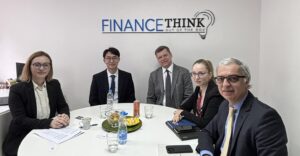

Today’s panel debate, “Strengthening state aid governance in the Western Balkans: transparency, effectiveness and EU alignment”, brought together a diverse group of policymakers, representatives of public institutions from the Western Balkans, international organizations, and research and civil society actors. The discussion highlighted that state aid is often perceived as a technical or administrative issue, while in practice it represents a powerful economic policy instrument with direct implications for public finances, market competition, and public trust.
The debate underscored that although state aid has proven to be an important anti-cyclical tool—particularly during periods of crisis—its role cannot be assessed solely through the volume of resources allocated. Participants emphasized that the key challenge lies in ensuring that state aid is well-targeted, effective, and aligned with long-term development objectives and EU rules. Recent regional trends point to increasingly diverging approaches across countries, raising questions about coherence, effectiveness, and the risk of ad-hoc policy interventions.
A central takeaway from the panel was the critical importance of transparency and accountability. Fragmented and non-standardized data continue to limit meaningful monitoring and evaluation of state aid in the region. In this context, the discussion highlighted the value of the newly developed regional platform on state aid as a practical tool to support evidence-based policymaking, cross-country comparison, and informed public debate—ultimately contributing to stronger governance and closer EU alignment in the Western Balkans.